SR-17018
Gray Market Opioid
A lab research opioid is being sold online as a high-purity “research compound.” The label sounds scientific. The danger is simple: people can buy an unapproved opioid-like chemical with no human safety guidance.
This is not a supplement. It is a research opioid escaping the lab.
SR-17018 is a synthetic research compound studied for activity at the mu-opioid receptor. It was not developed as a gas station product, supplement, wellness aid, or consumer drug.
Yet online vendors advertise it with language like “research chemical,” “advanced research compound,” “99% purity,” and “lab tested.” Those words can make the product sound clean and professional, but they do not make it safe for human use.
It sounds legitimate.
“Research chemical,” “analytical standard,” and “high purity” language creates a false sense of control.
It is not approved for people.
There is no FDA-approved human use, no established safe dose, and no consumer safety labeling.
It targets curiosity and desperation.
People seeking pain relief, euphoria, or opioid withdrawal relief may be pulled in.
The risk is hidden online.
A few clicks can make a dangerous research opioid look like a normal internet purchase.
SR-17018, explained in plain English
You do not need a chemistry degree to understand the issue. A compound that acts on opioid receptors should not be sold to the public as a casual online “research” product.
What is SR-17018?
SR-17018 is a synthetic research compound associated with the mu-opioid receptor, the same receptor system involved with opioids such as morphine, oxycodone, heroin, and fentanyl.
It is not a supplement. It is not a natural product. It is not an approved medication for consumer use.
Why should regular people care?
Because research chemicals are no longer staying in research settings. They are being sold online to ordinary people who may not understand what they are buying.
- A person in pain may buy it for relief.
- A person in withdrawal may buy it out of desperation.
- A person seeking a “legal” opioid may buy it after reading online forums.
- A young person may see “research chemical” and think it is a loophole.
- A community may not recognize the danger until overdoses begin appearing.
Where is it sold?
SR-17018 appears in online research chemical markets, laboratory supply listings, and gray-market vendor pages. Some listings use professional language, purity claims, catalog numbers, and lab-style photos to appear legitimate.
The problem is not legitimate scientific research. The problem is public access, misuse, and vendors using research language as a shield.
How is it marketed?
The marketing often uses technical language that hides the danger:
- “Research chemical”
- “Advanced research compound”
- “Analytical standard”
- “99%+ purity”
- “Independently tested”
- “Not for human consumption” disclaimers
- Small-quantity pricing that looks like it is meant for individual buyers
“High purity” does not mean safe. It can mean a person is receiving a more concentrated active opioid-like compound.
Why is “research chemical” language dangerous?
“Research chemical” can make a product sound academic, sterile, and controlled. But when a compound is sold online to consumers, the person buying it may have no medical supervision, no verified dosing guidance, and no way to know how their body will respond.
A lab label does not protect someone from addiction, respiratory depression, overdose, contamination, or unpredictable effects.
What can it do to the body?
Because SR-17018 is associated with opioid receptor activity, the concerns include opioid-like effects such as sedation, euphoria, slowed breathing, impaired coordination, constipation, dependence, withdrawal, and overdose.
The most important fact is the unknown: there is no approved consumer use and no established human safety profile for people self-administering it.
Can SR-17018 cause addiction or overdose?
Any compound acting on opioid receptors raises serious concerns about dependence, withdrawal, and overdose. With SR-17018, the danger is intensified by the lack of human safety data and the gray-market setting.
No one should be relying on internet comments, vendor claims, animal studies, or guesswork to use an opioid-active research chemical.
Is it legal?
SR-17018 may not be specifically named in every controlled substance law, but that does not make it safe or lawful to sell for human use. Research chemical markets often operate in gray areas and use disclaimers to avoid accountability.
Communities should not wait for a chemical to become famous before asking why an opioid-active research compound is being sold to the public.
This is what SR-17018 listings look like online
These listings do not look like street-drug sales. They look like lab products. That professional appearance is part of the danger.
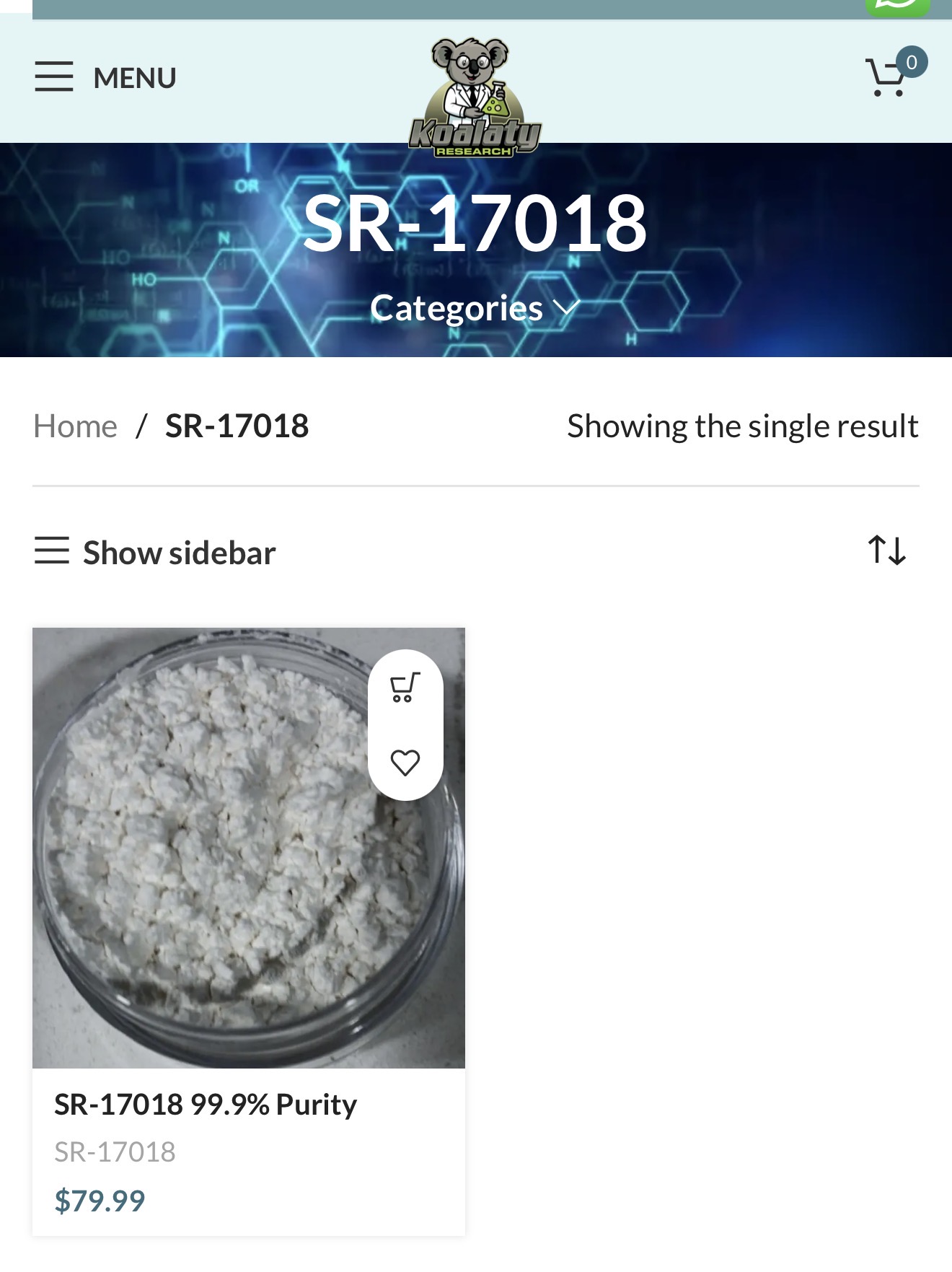
SR-17018 “99.9% Purity” Listing
Purity claims and online pricing can make an unapproved opioid-active compound feel like a normal product.
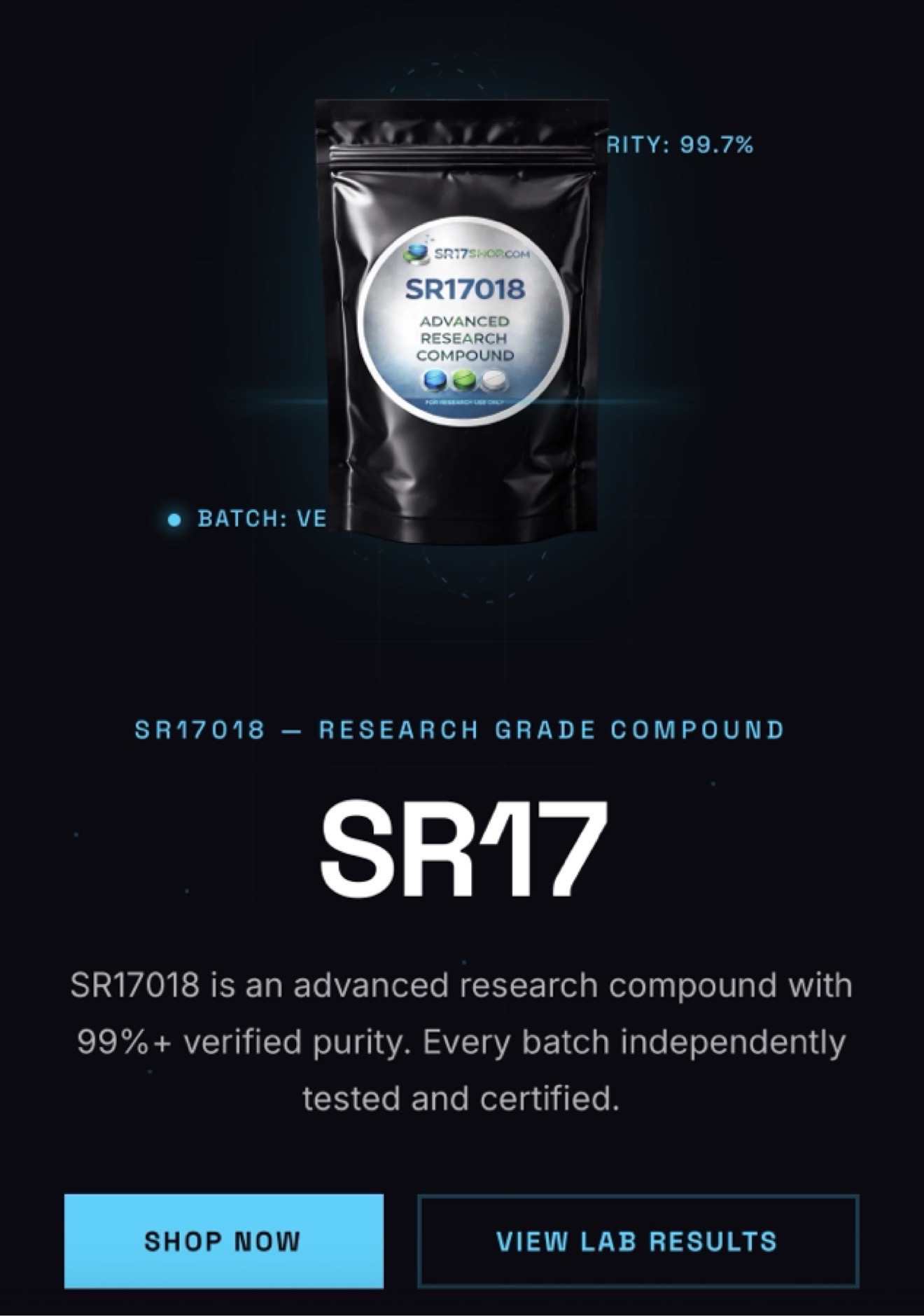
“Advanced Research Compound”
Lab-style language and “independently tested” claims create legitimacy while hiding the human-use danger.
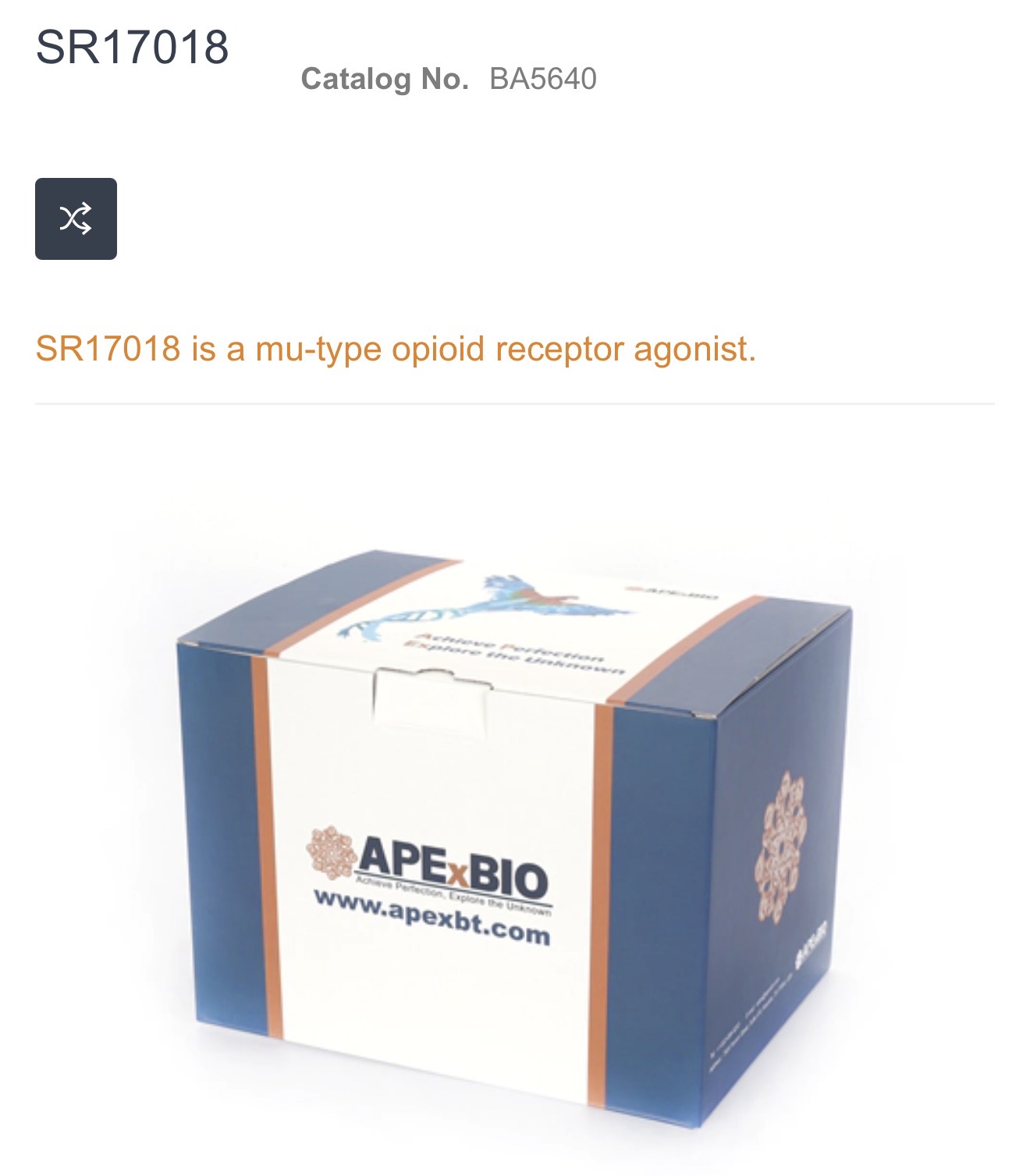
SR17018 Catalog Label
A research label may be appropriate in a lab. It becomes dangerous when the same compound is resold or misused by consumers.
The disturbing pattern is clear: a lab research opioid is given a polished online storefront, purity claims, and technical wording. The product may look controlled, but for consumers it is an uncontrolled experiment with no approved human use.
What to look for online and in your community
Red flags in listings
- Labels or listings that say “SR-17018,” “SR17018,” “mu-opioid receptor agonist,” or “biased opioid agonist”
- Claims such as “99% purity,” “independently tested,” “advanced research compound,” or “analytical standard”
- “Not for human consumption” language used beside consumer-friendly pricing or checkout options
- Small milligram-size quantities sold directly online
- Vendors implying legitimacy through lab reports, certificates, or catalog-style labels
- Online forums discussing self-use, withdrawal, pain relief, or opioid substitution
What communities can do
- Warn schools, recovery groups, health departments, churches, employers, and neighborhood organizations about research chemical opioids.
- Report adverse events involving research chemicals to FDA MedWatch or poison control.
- Report vendors that appear to market research opioids for human misuse.
- Ask lawmakers and regulators to address gray-market opioid research chemicals before they spread further.
- File a complaint with the FTC about deceptive marketing: reportfraud.ftc.gov