Akuamma
Unregulated Alternative
A seed traditionally used in West Africa is now being sold online and in smoke-shop markets as a “natural” kratom alternative. The problem is not just the seed. It is the new wave of concentrated extracts with almost no human safety data.
This is how “natural” turns into an unregulated experiment.
Akuamma comes from the seeds of Picralima nitida, a tree native to West Africa. Sellers often market it as a plant-based pain product, a kratom alternative, or a natural comfort aid.
But the products now being sold are not always simple whole seeds. They include capsules, powders, resins, 20x extracts, 100:1 extracts, and standardized alkaloid products. These concentrated versions are poorly studied, inconsistently labeled, and sold without the kind of safety testing most people assume has already happened.
It sounds harmless.
Words like “natural,” “botanical,” “traditional,” and “plant-based” make the product feel safe.
It is marketed like kratom.
Sellers position akuamma as a substitute for kratom, pain products, or opioid-like relief.
Extracts change the risk.
Whole seeds are not the same as 20x, 100:1, resin, or standardized alkaloid concentrates.
The safety data is thin.
Human dosing, long-term effects, interactions, and overdose risk are not well established.
Akuamma, explained in plain English
You do not need a pharmacology background to understand the concern. A product can be plant-derived and still be risky, especially when it is concentrated, standardized, extracted, and sold without meaningful oversight.
What is akuamma?
Akuamma refers to seeds from the Picralima nitida tree. The seeds contain alkaloids that have been studied for pain-related and opioid-receptor activity in laboratory settings.
Traditional seed use is one thing. Modern concentrated extracts sold online and in smoke-shop markets are another.
Why should regular people care?
Because this is being sold as a “natural” alternative in the same marketplace that already sells kratom, 7-OH, tianeptine, and other gas station opioid-like products.
- A person in pain may buy it for relief.
- A person avoiding kratom may buy it as a substitute.
- A person in recovery may think it is a safer plant product.
- A store owner may stock it without understanding the unknowns.
- A consumer may assume “natural” means safe, tested, and regulated.
Where is it sold?
Akuamma is sold online and may be found in smoke shops, vape shops, CBD shops, kratom retailers, and botanical supplement markets. It may appear as seeds, powder, capsules, resin, or high-strength extracts.
Its placement beside kratom and other unregulated products matters. The market is selling it as part of the same “legal alternative” pipeline.
How is it marketed?
Sellers often use language that makes the product sound gentle and safe:
- “Natural pain relief”
- “Kratom alternative”
- “Botanical discomfort relief”
- “Traditional seed”
- “20x extract”
- “100:1 extract”
- “Resin” or “standardized extract”
That language hides the real question: what happens when a traditional seed becomes a concentrated industrial extract?
Why are extracts the concern?
Extracts concentrate plant chemicals. A 20x extract or 100:1 extract is not the same as a person chewing a seed. Concentration can make dosing unpredictable and may increase the risk of side effects, interactions, or toxicity.
Most shoppers have no way to verify what “20x,” “100:1,” or “62% extract” actually means in the bottle they bought.
What can it do to the body?
Akuamma contains alkaloids that have been studied for pain-related activity and interaction with opioid receptor systems. Users report effects such as pain relief, sedation, relaxation, nausea, constipation, and dizziness.
The major concern is the unknown: dosing, dependence potential, interactions with alcohol or sedatives, liver effects, and overdose risk are not well defined in humans.
Can akuamma cause addiction or overdose?
The answer is not well established because human safety data are limited. But that uncertainty is exactly the warning. Concentrated products that affect opioid-related systems should not be treated casually.
Lack of confirmed deaths or large studies does not equal proof of safety. It may simply mean the product is new, underreported, or not being tested for.
Is it legal?
Akuamma is not federally scheduled in the United States. But legality is not the same as safety. Products marketed for pain, withdrawal, or medical effects may raise regulatory concerns.
Communities should ask why concentrated extracts with limited human safety data are being sold as “natural alternatives” without clear dosing standards, warning labels, or oversight.
This is what akuamma looks like online and in stores
These products show the shift from whole seeds to modern concentrates. The further a product moves from the raw seed, the more questions communities should ask.
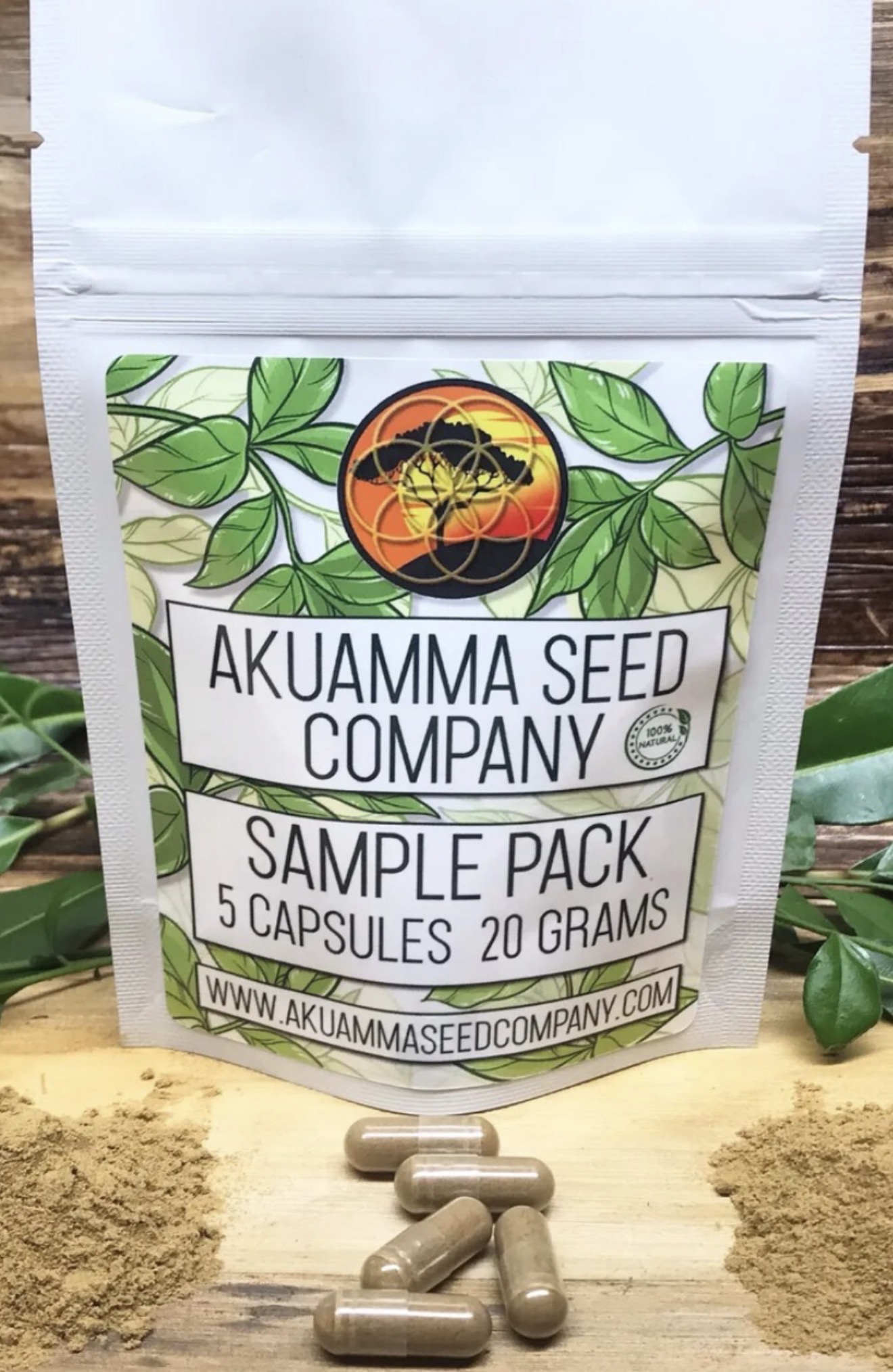
Akuamma Seed Company Whole Seeds
Whole seeds are the least processed form, but they are still sold with limited consumer safety information.
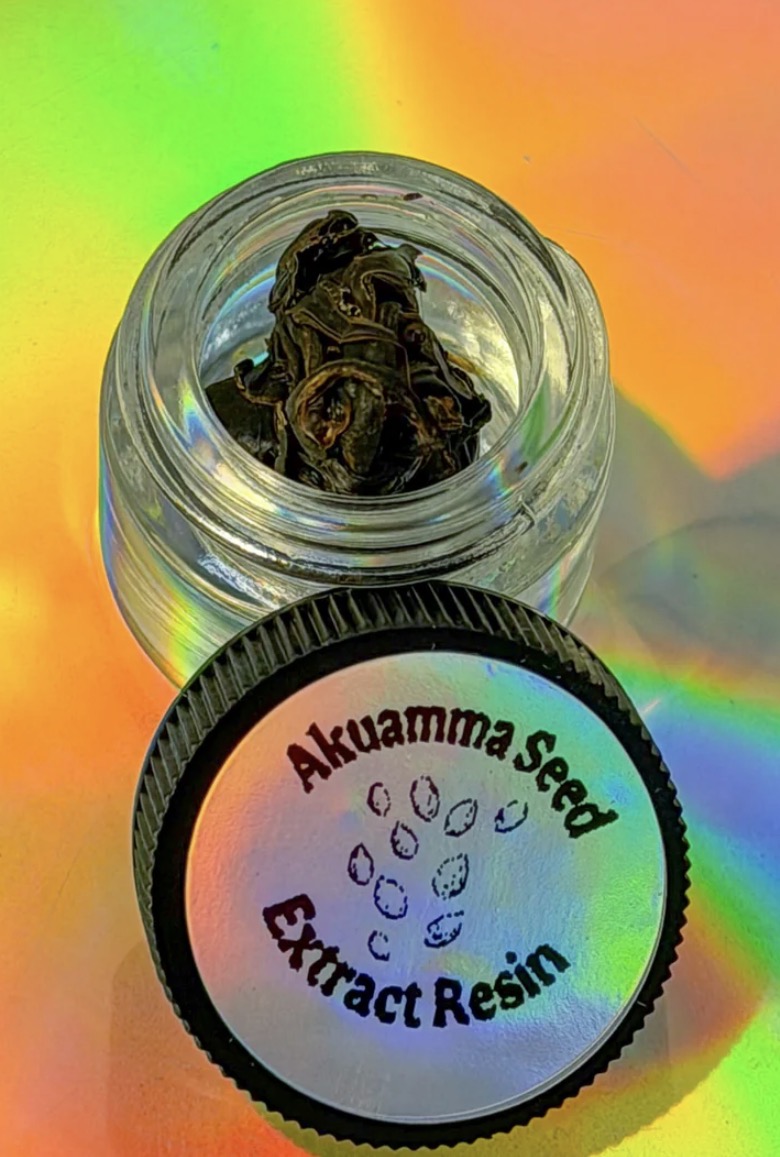
Akuamma Extract Resin
Resin concentrates plant chemicals into a stronger, less predictable form. Consumers are left guessing.
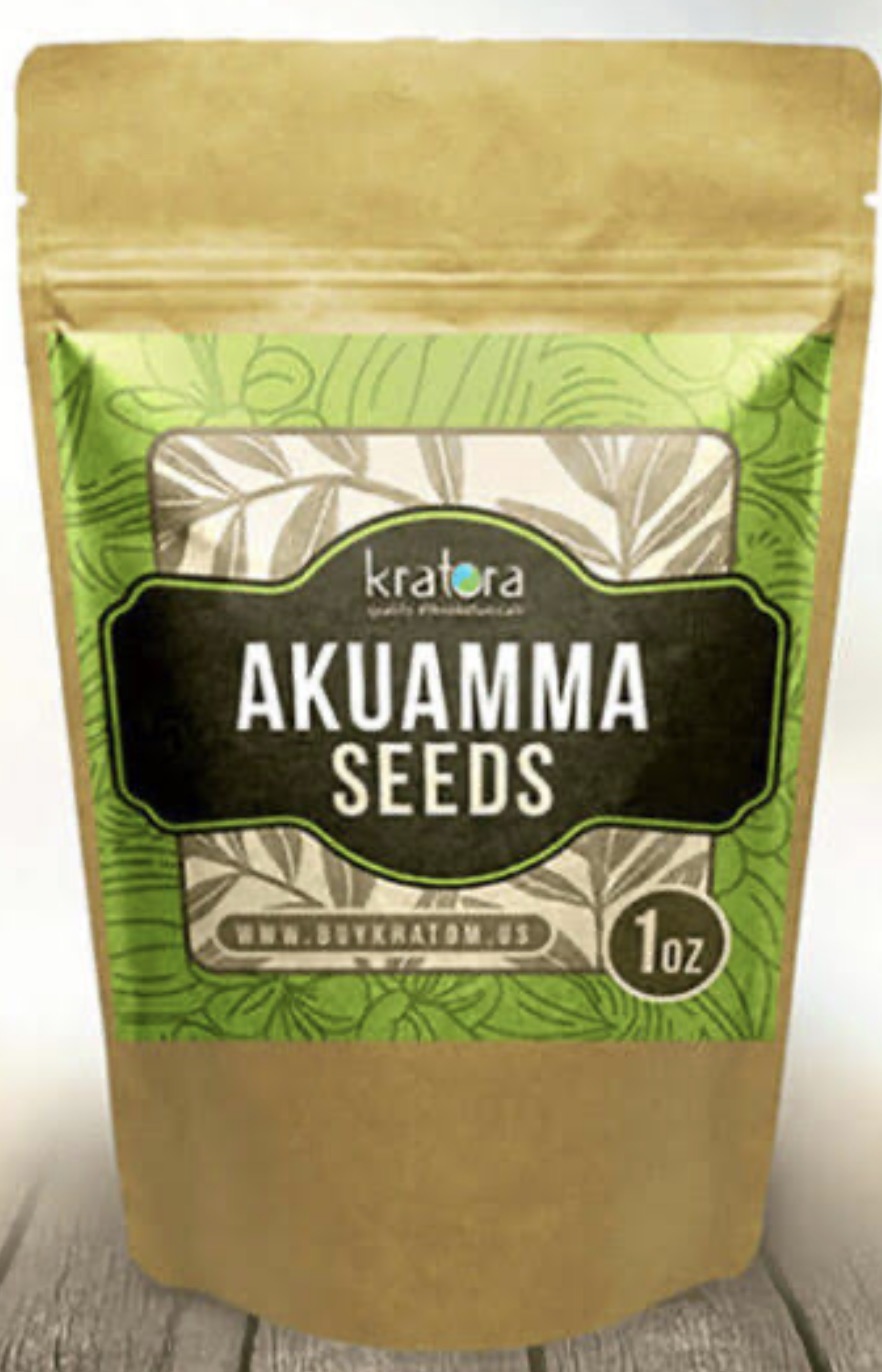
Kratora Akuamma Seeds
Packaging resembles the broader kratom and botanical market, where “natural” is often used as a safety signal.
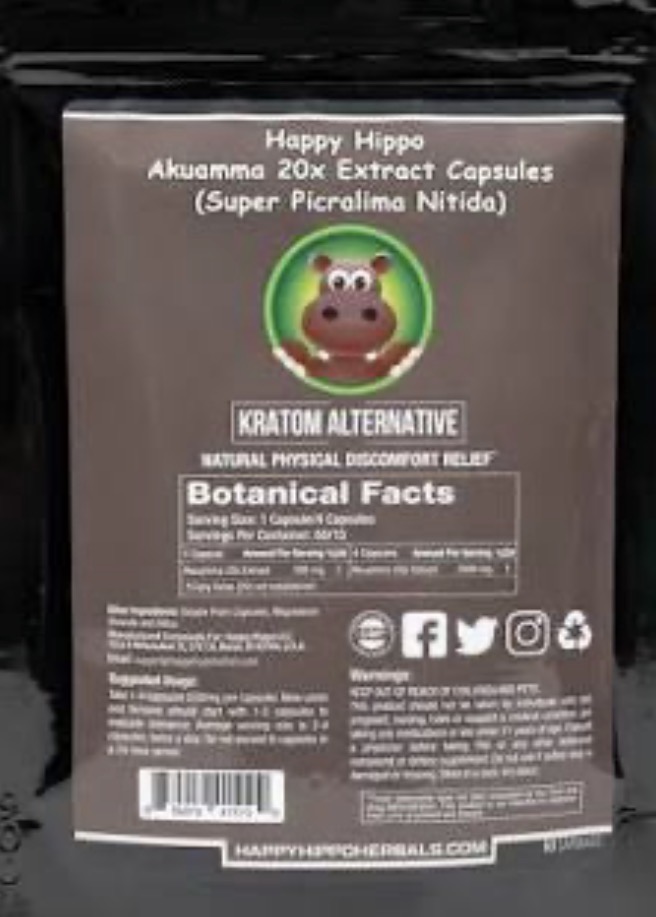
Happy Hippo Akuamma 20x Extract
A 20x extract is not traditional seed use. It is a concentrated product with far more unanswered safety questions.
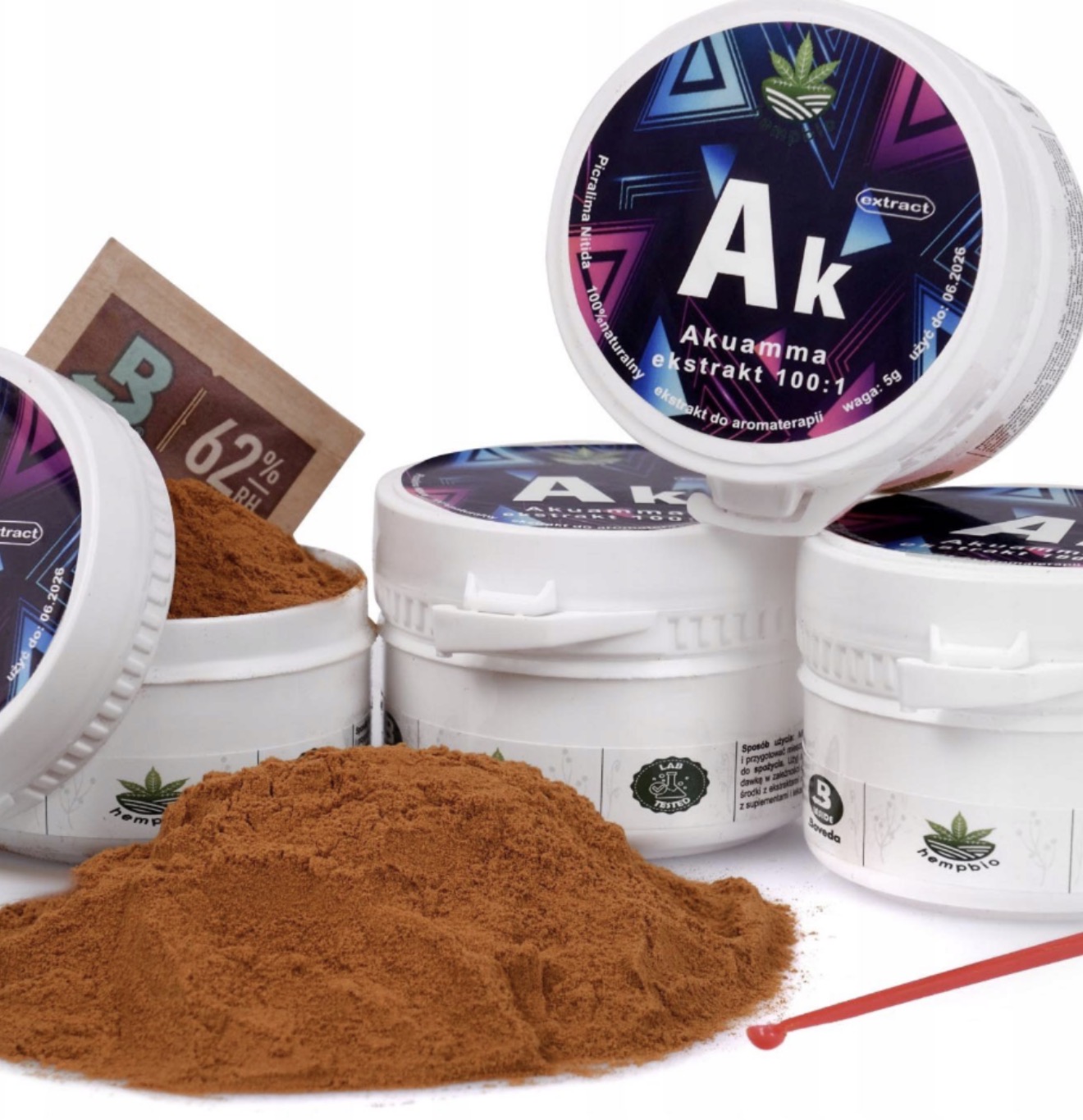
“62% Extract” Akuamma
Standardized extract claims sound scientific, but without oversight consumers cannot verify strength, purity, or risk.
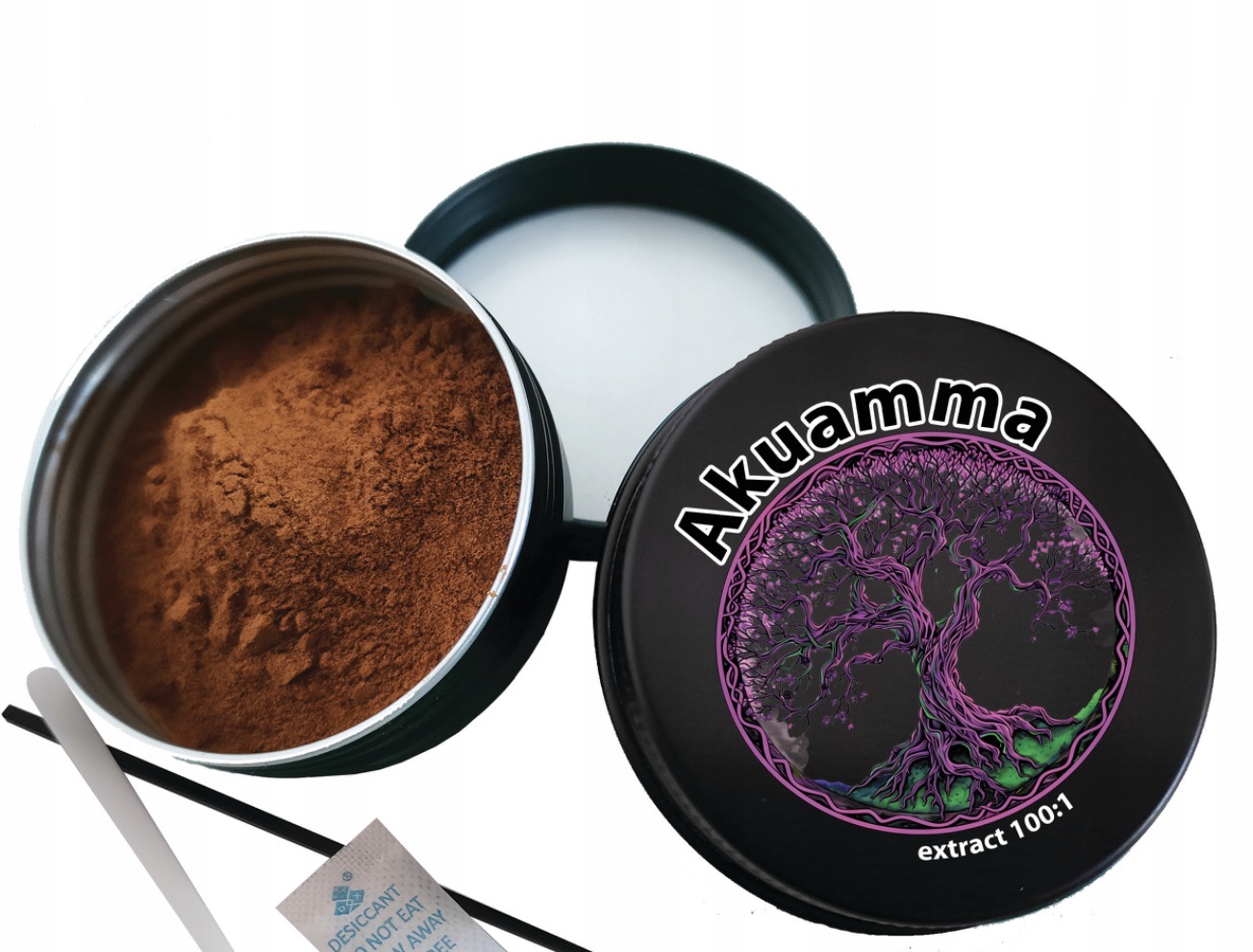
Akuamma 100:1 Extract
100:1 concentration signals a major jump away from traditional use and into industrial-strength extraction.
The disturbing pattern is familiar: a plant with traditional use becomes a modern extract market. Whole seeds become powders, capsules, resins, 20x extracts, 100:1 concentrates, and standardized alkaloid products. The marketing says natural. The safety data does not keep up.
What to look for in your neighborhood
Red flags on shelves
- Labels that say “akuamma,” “Picralima nitida,” “akwamma,” or “kratom alternative”
- Extract claims such as 20x, 50x, 100:1, resin, or “62% extract”
- Claims about pain relief, withdrawal relief, relaxation, or “natural opioid alternative” effects
- Products sold beside kratom, 7-OH, tianeptine, hemp, vapes, or other unregulated products
- No clear dosing standards, no child-resistant packaging, and weak warning labels
- Marketing that implies “natural” means safe, tested, or risk-free
What communities can do
- Ask stores why concentrated akuamma extracts are being sold without clear safety information.
- Warn schools, recovery groups, churches, health departments, and neighborhood organizations.
- Report adverse events to FDA MedWatch, even if you are not sure the product caused it.
- Report deceptive “safe alternative” marketing to consumer protection agencies.
- File a complaint with the FTC about deceptive marketing: reportfraud.ftc.gov