7-OH
Beyond the Leaf
7-Hydroxymitragynine is an opioid-active kratom compound. Concentrated products can carry serious dependence and overdose risks, whatever the packaging says.
This is not a fringe internet drug. It is showing up in neighborhood stores.
7-Hydroxymitragynine (7-OH) is an opioid-active alkaloid present at low levels in kratom leaf. Commercial products may contain much higher concentrations, including 7-OH produced by chemical conversion of kratom-derived mitragynine. A package labeled “kratom” does not establish that its contents resemble ordinary leaf.
FDA has documented concentrated 7-OH tablets, gummies, drink mixes and shots marketed through retail shops and online. Availability and legality now vary by jurisdiction; products pictured below are examples of marketing, not proof of current lawful sale.
It looks harmless.
Small tablets, gummies, bottles, and blister packs can look like candy, mints, or energy products.
It is sold openly.
Products have been marketed through gas stations, smoke shops, vape shops and websites. Sales restrictions vary by jurisdiction.
It hides behind kratom language.
Labels use words like “botanical,” “alkaloid,” “premium,” “wellness,” and “plant-based.”
Dependence is a real risk.
Repeated exposure can lead to tolerance, dependence and withdrawal. Individual risk and onset vary.
7-OH, explained in plain English
You do not need a medical background to understand the problem. A concentrated opioid-like product should not be sold in candy flavors at the same places people buy soda, chips, vapes, and gas.
What is 7-OH?
7-OH is short for 7-Hydroxymitragynine. It is one of the opioid-active compounds connected to kratom. It can interact with the body’s opioid receptor system, which is the same general system involved with drugs like morphine, oxycodone, and heroin.
The danger is concentration. Instead of someone using ordinary kratom leaf, companies are selling products built around one of kratom’s most potent opioid-like components.
Why should regular people care?
Because these products are being sold in ordinary places to ordinary people who may not understand what they are buying.
- A tired worker may buy it for energy.
- A student may buy it for focus.
- A person in pain may buy it for relief.
- A person in recovery may buy it thinking it is “just kratom.”
- A teen may see a colorful tablet pack and think it is harmless.
Where is it sold?
7-OH products are sold in gas stations, vape shops, smoke shops, CBD stores, convenience stores, and online. Some are displayed near checkout counters or alongside kratom, vapes, energy shots, and candy.
The placement matters. When a product is sold like a snack, many people assume it has been proven safe. That assumption is wrong.
How is it marketed?
The marketing often avoids the truth. Instead of saying “potent opioid-like kratom compound,” companies use softer language:
- “Premium kratom alkaloid”
- “Botanical extract”
- “Consistent results”
- “Feel good”
- “Control”
- “Ultra potent”
- “Blue razz,” “strawberry,” “mixed berry,” and other candy flavors
That language makes it feel modern, clean, and safe. But the packaging is not the danger. The substance inside is.
What can it do to the body?
7-OH acts at mu-opioid receptors. Reported and pharmacologically plausible harms include sedation, nausea, vomiting, constipation, dependence, withdrawal and potentially life-threatening respiratory depression, particularly with other sedating substances.
Withdrawal reports include anxiety, insomnia, gastrointestinal symptoms, muscle aches and cravings. Human evidence is still developing, and not every effect or dose-response relationship is established.
Why are tablets and gummies so alarming?
Because the product does not look like a drug. A tablet, gummy, or flavored pack can look like candy, mints, gum, or an energy supplement.
That makes it dangerous for children, teens, unsuspecting adults, people in recovery, and anyone who assumes “sold in a store” means “safe.”
Can 7-OH cause addiction?
Yes, repeated use can cause dependence and withdrawal. Reports describe cravings, escalating use and difficulty stopping. Anyone using regularly who wants to stop should seek clinical advice, especially if also using alcohol, benzodiazepines or other opioids.
That is the part communities need to understand: the first purchase may feel casual. The consequences may not be.
Is 7-OH Schedule I federally? Updated October 11, 2026
Not yet under the new 7-OH action. On October 9, 2026, DOJ announced that DEA would issue a revised Notice of Intent for temporary Schedule I control of 7-OH and mitragynine pseudoindoxyl (MGPI). A notice of intent is not a final scheduling order.
HHS recommended a threshold of more than 1 mg/g in solid products or 1 mg/mL in liquids, or a mitragynine-to-7-OH/MGPI ratio below 100:1, including combined 7-OH and MGPI amounts. These are recommended scheduling thresholds, not FDA safety limits. DEA has not yet issued a temporary scheduling order for 7-OH. MGPI, MGM-15 and MGM-16 were temporarily scheduled on August 26, 2026; the October 9 notices address updated or reissued actions.
Separately, FDA states that concentrated 7-OH is not a lawful dietary-supplement ingredient or conventional-food additive, and no 7-OH medicine is FDA approved. State laws may be stricter. Read the October 9 DOJ announcement.
Suspect an opioid overdose? Act immediately.
Unresponsiveness, slow or absent breathing, gurgling, or blue or gray lips are emergency warning signs. Call 911, give naloxone if available, and follow dispatcher instructions. Naloxone may reverse opioid effects, but its response with 7-OH products is not fully characterized. Do not wait to see whether it works. Give rescue breaths or CPR as instructed and stay with the person.
For a suspected ingestion without immediate life-threatening symptoms, call Poison Control at 1-800-222-1222. If someone is dependent, seek medical support rather than relying on an unverified retail product to manage withdrawal.
What federal agencies have documented
July 2025FDA warned companies marketing concentrated 7-OH products in tablets, gummies, drink mixes and shots.
December 2025FDA and federal partners seized approximately 73,000 units of concentrated 7-OH products, valued at about $1 million.
October 9, 2026DOJ announced revised DEA scheduling notices and an HHS-recommended concentration-and-ratio approach.
Sources: FDA warning letters · FDA seizure announcement · DOJ October 2026 update.
This is what 7-OH looks like on shelves and online
These are examples of packaging and advertising collected for recognition. Product images do not establish current composition, availability, or legality. Only laboratory testing can confirm what a particular package contains.
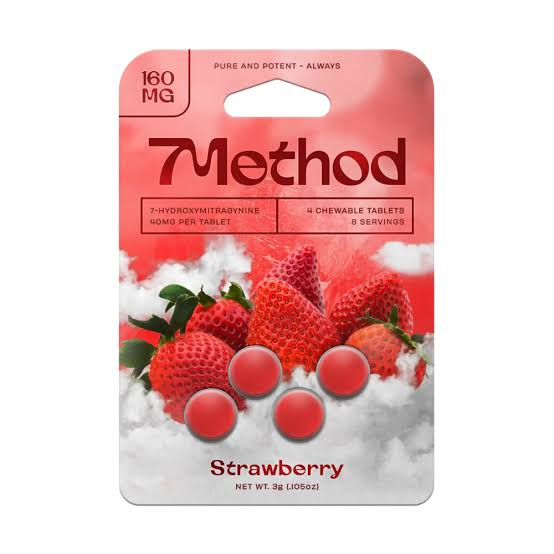
“Method” 7-OH
Strawberry chewable tablets. The format looks familiar and harmless, but the product is built around concentrated 7-OH.
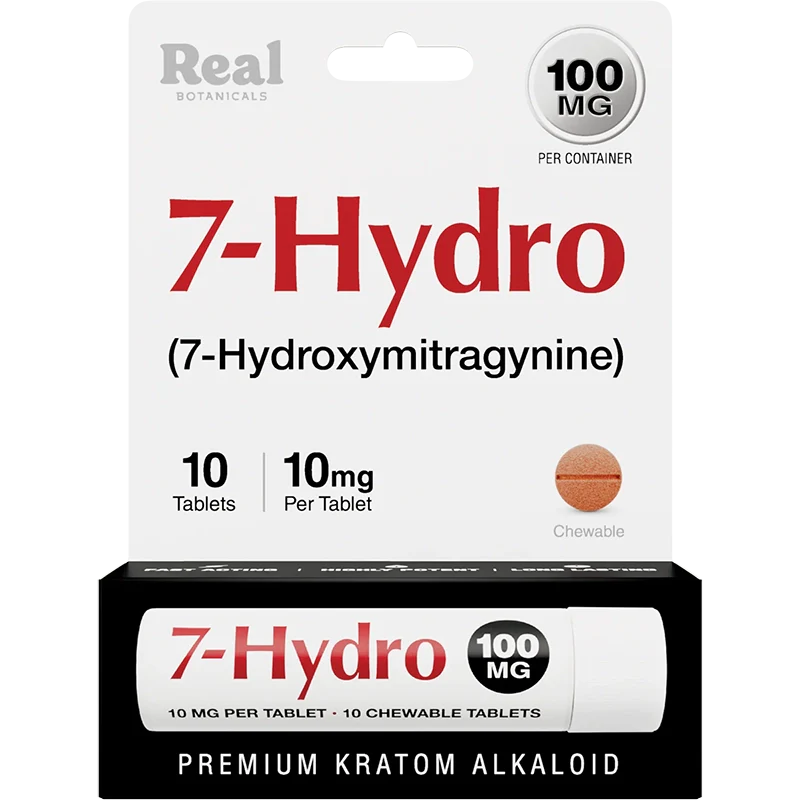
“Real Botanicals” 7-Hydro
“Botanical” language makes the product sound clean and natural while hiding the opioid-like concern.
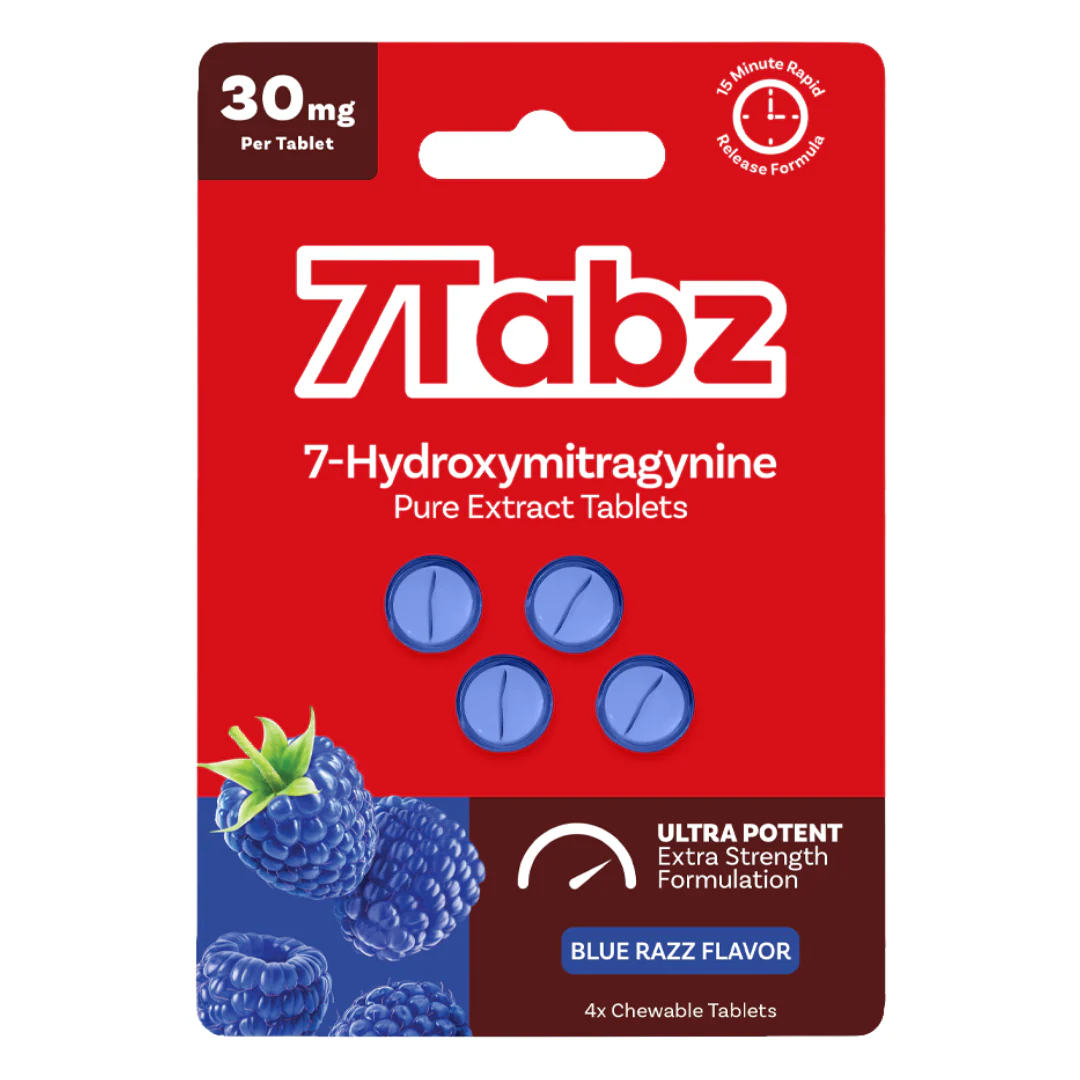
“Ultra Potent” Blue Razz
Candy-flavored, chewable, and labeled “ultra potent.” That combination should alarm any community.
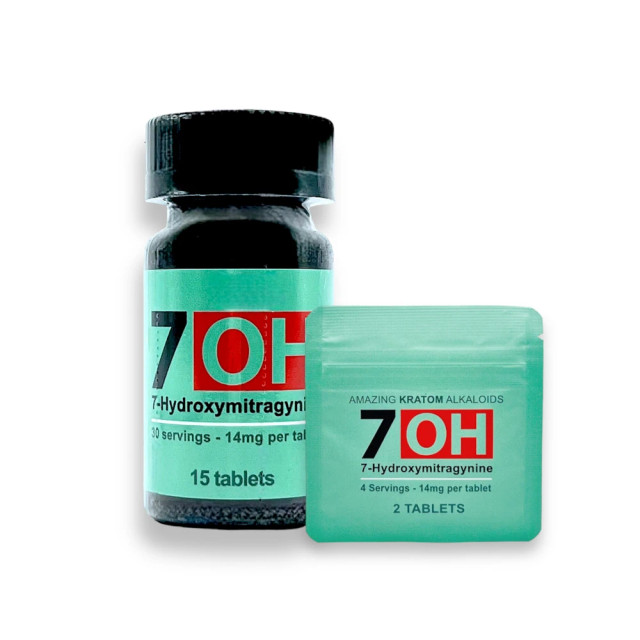
“7OF” 7-Hydroxymitragynine
Branded like a modern supplement, not a product tied to opioid-like effects and dependence.
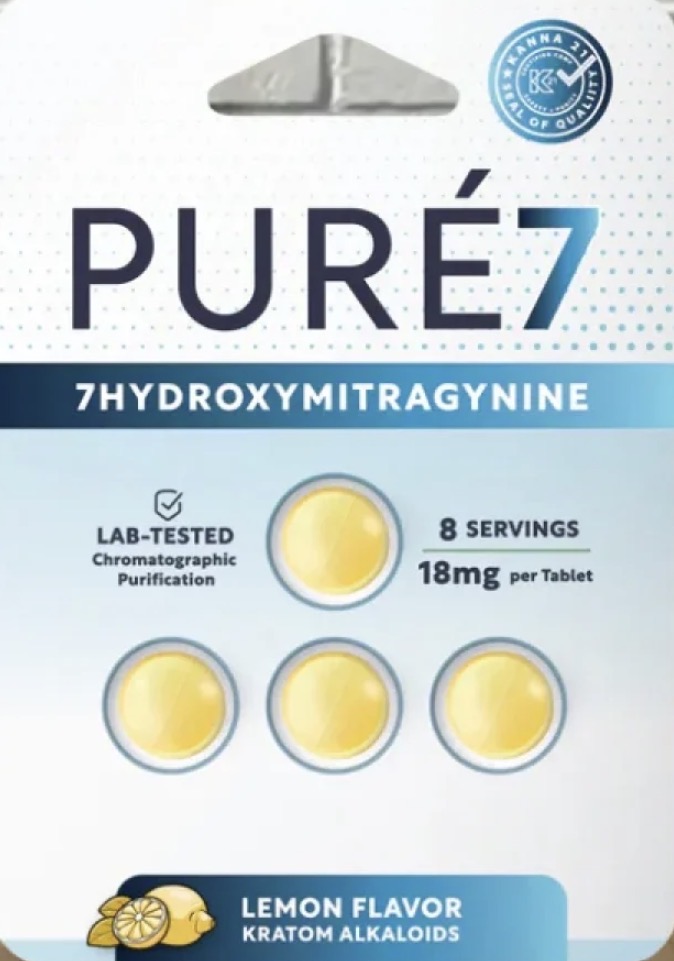
“PURE7” Lemon Flavor
Lemon flavor and clean packaging make this look like a wellness product instead of a concentrated kratom compound.
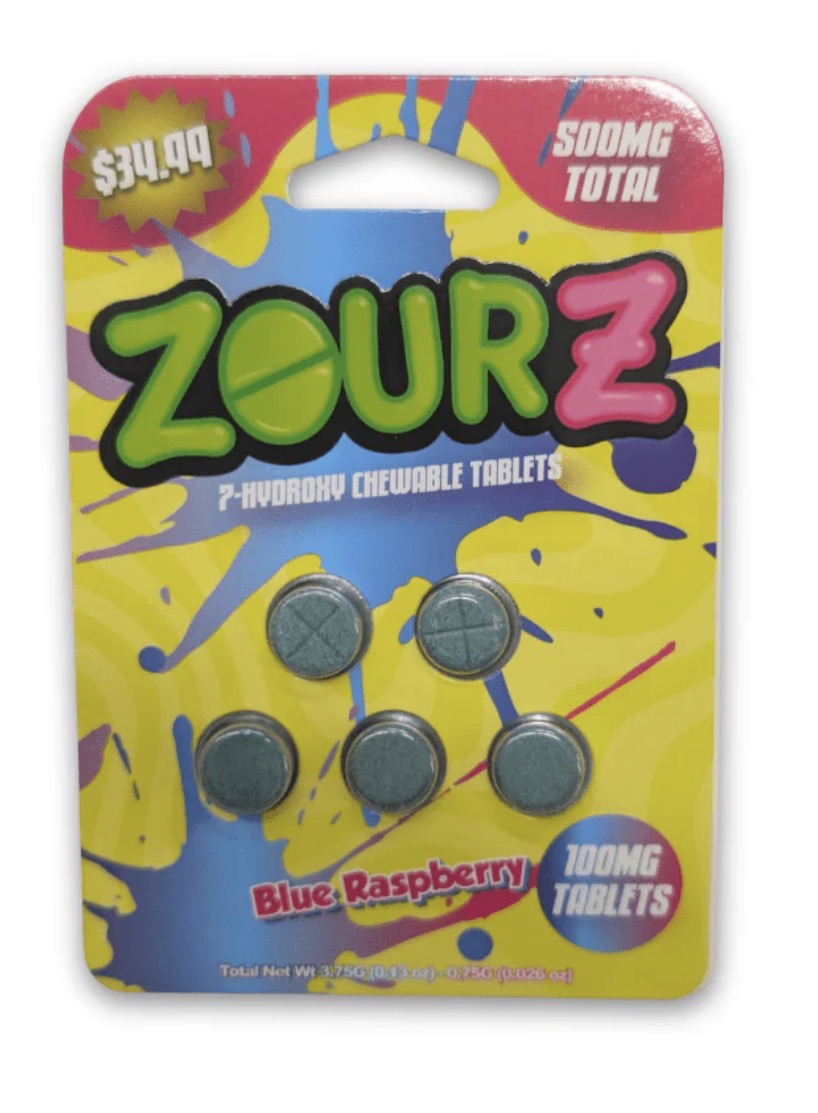
“7OHMZ” Blue Raspberry
Blue raspberry chewable tablets. This is the kind of packaging people associate with candy, not opioid-like risk.
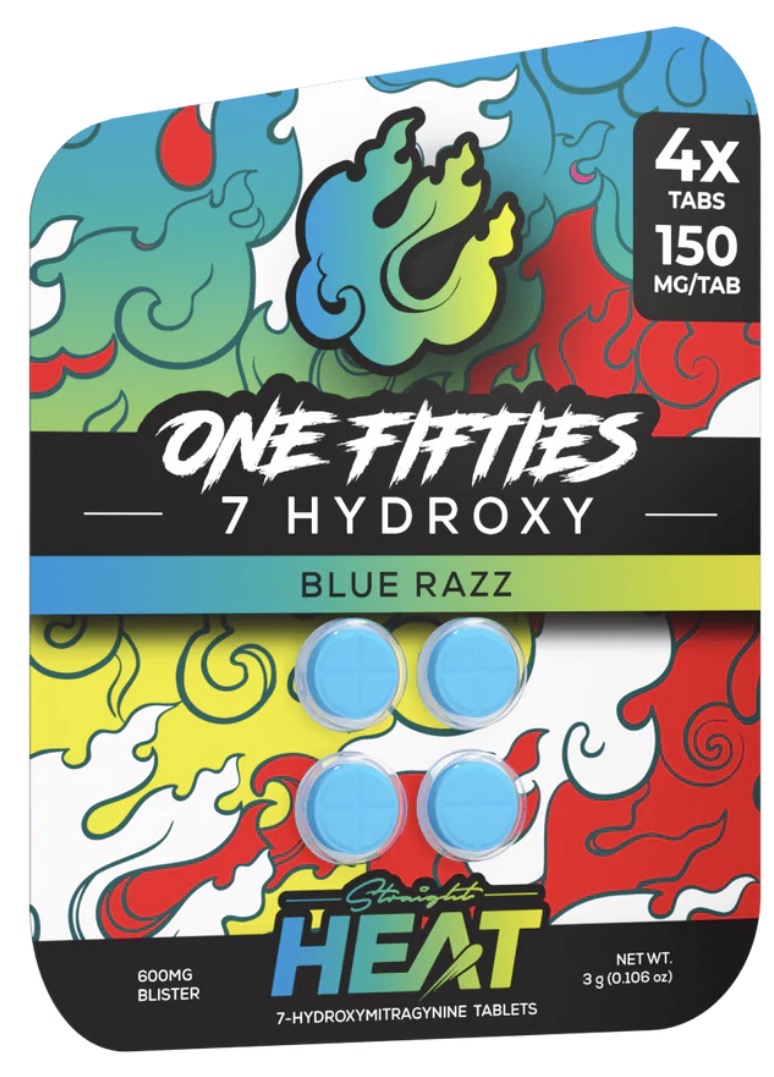
“HEAT” 7-Hydroxymitragynine
High-dose product in bright packaging. “Blue razz” flavor makes a dangerous product look casual.
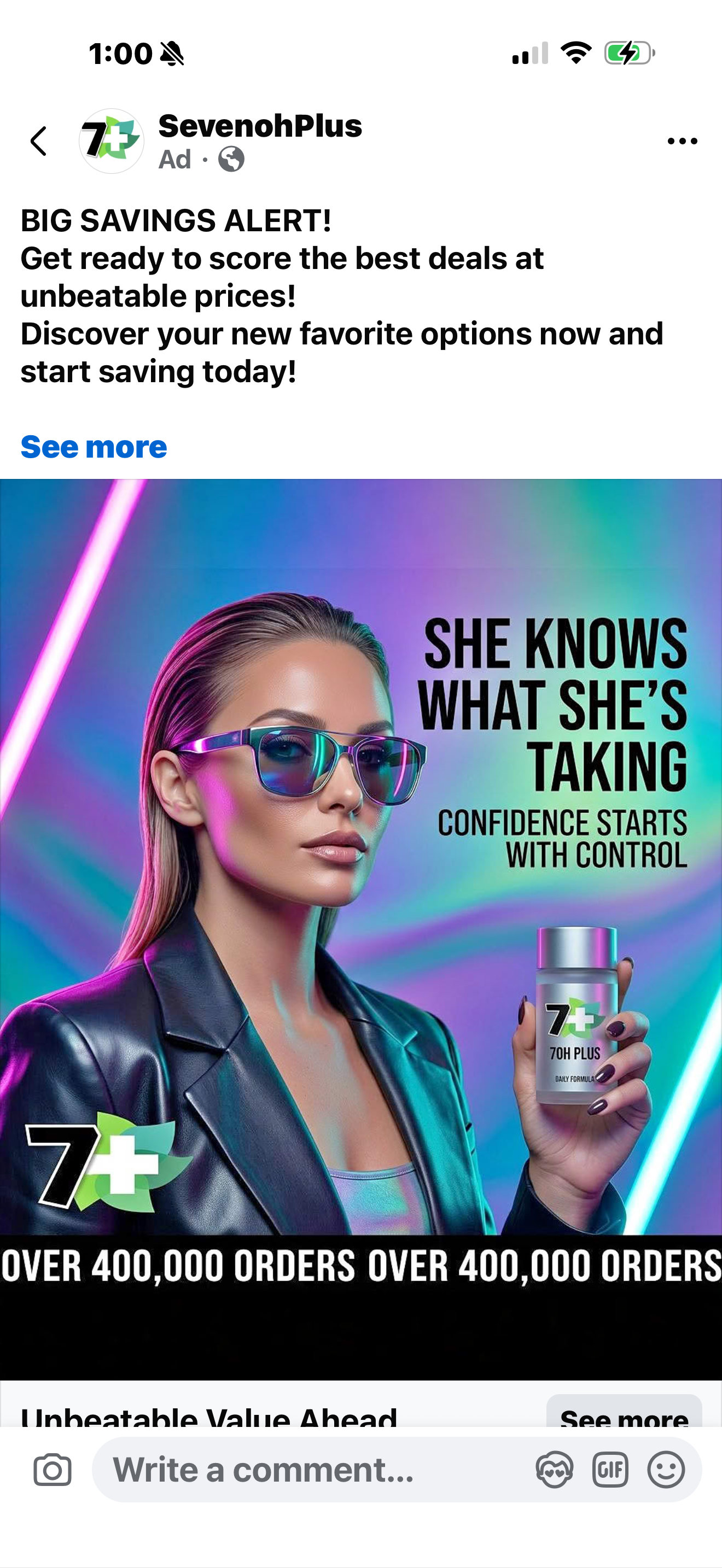
SevenohPlus Ad
Discount language and confidence messaging normalize use and make the product feel like a lifestyle purchase.
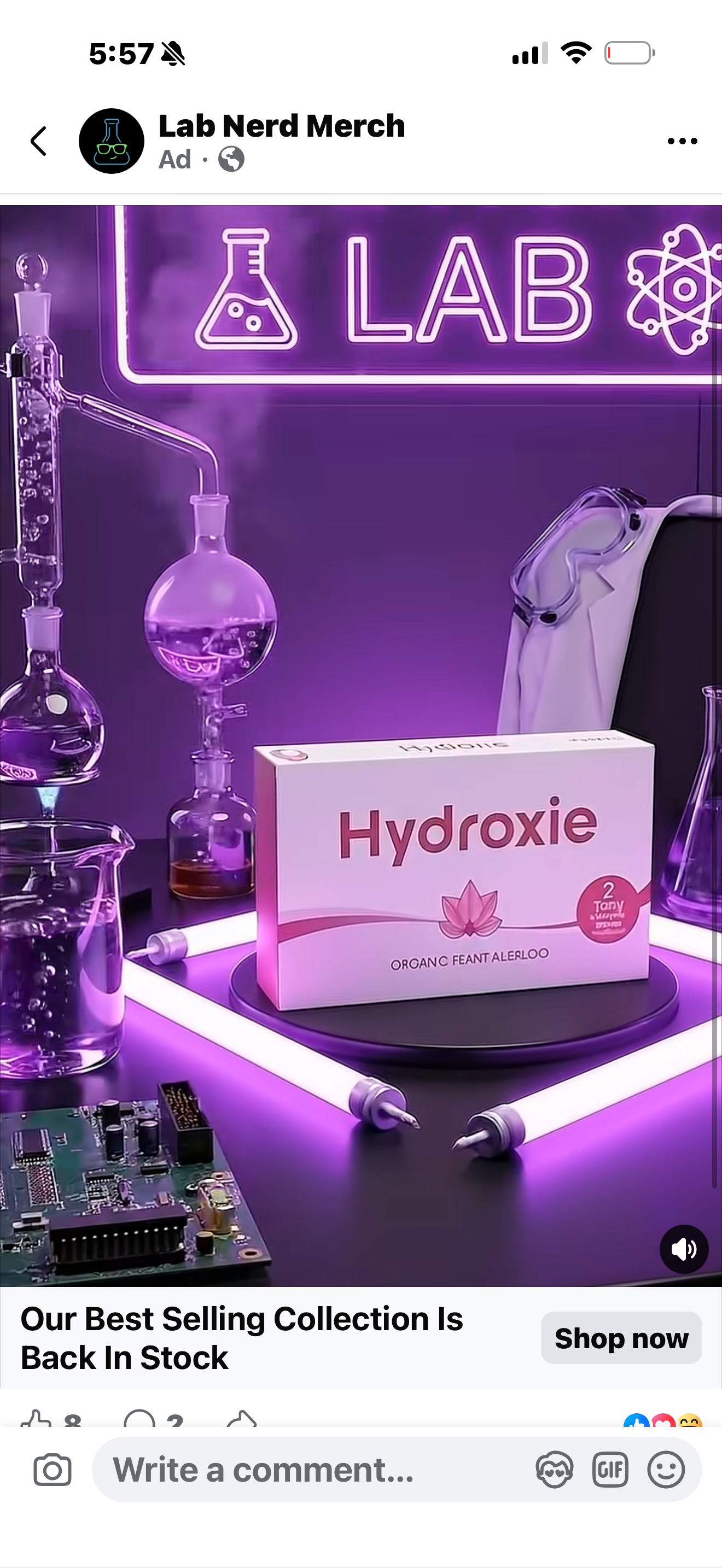
Lab Nerd / Hydroxie Ad
“Back in stock” hype and internet-culture branding make a risky product feel trendy and collectible.
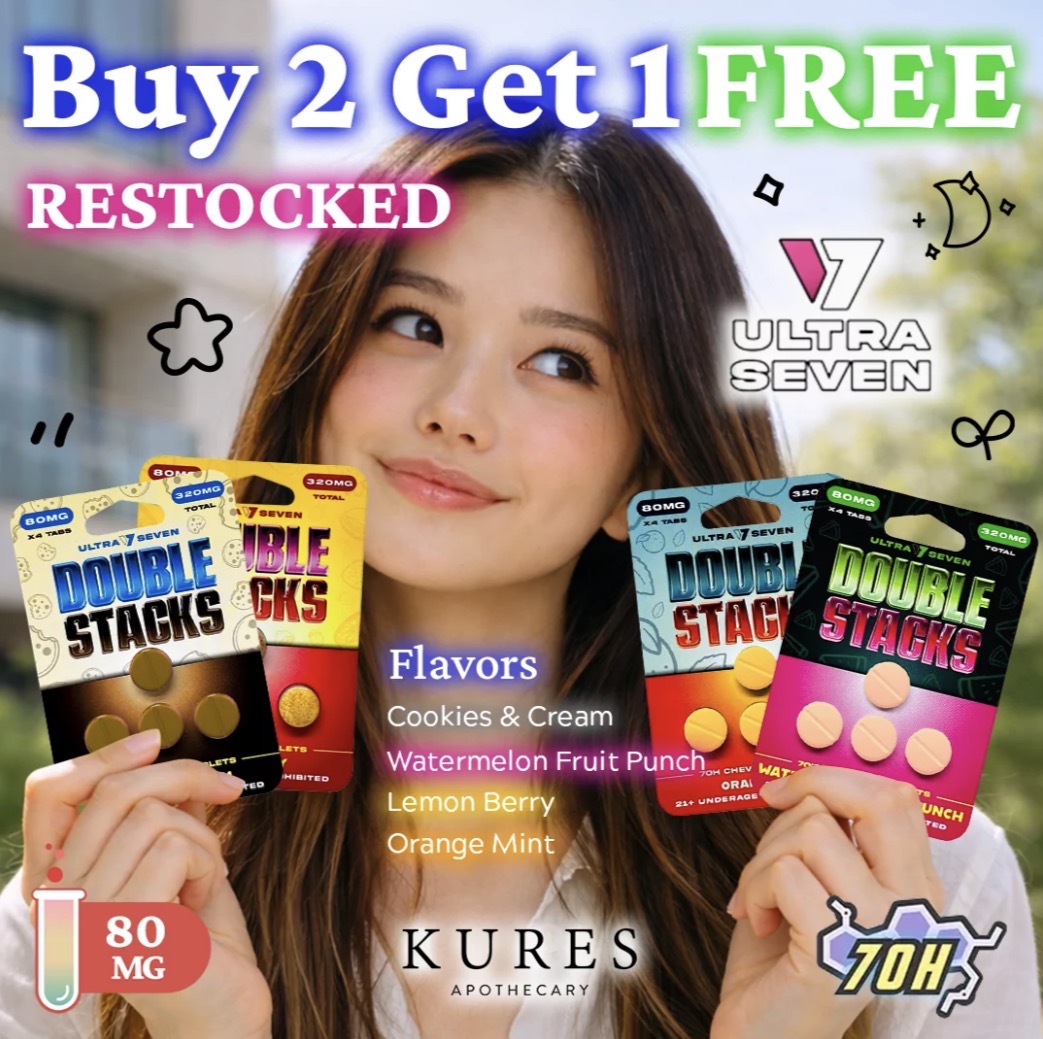
Ultra Seven / Stacks
Dessert and fruit flavors, sale tactics, and bright visuals make concentrated 7-OH look like candy.
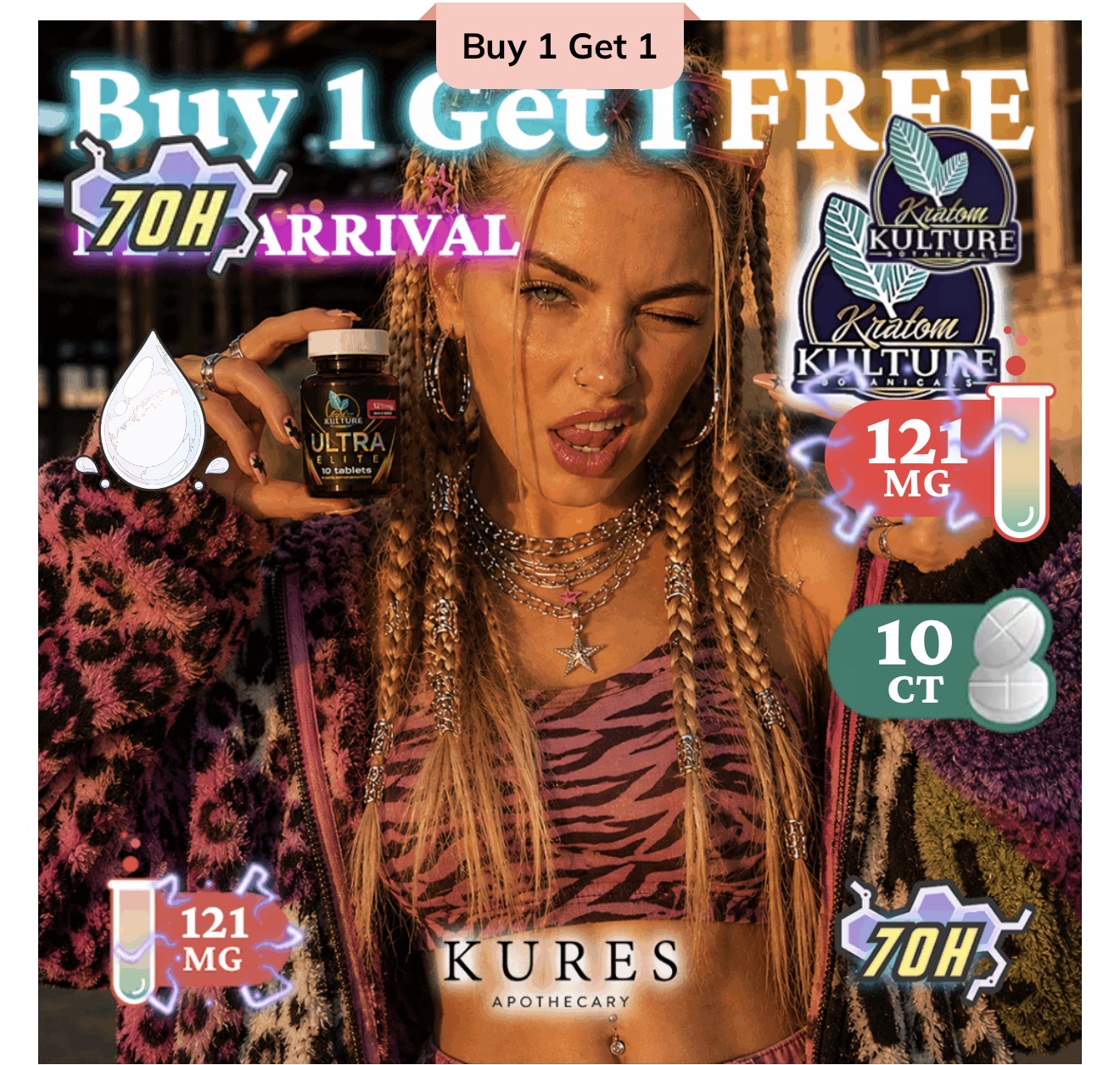
Kultom Ultra
“Buy one, get one” promotions encourage repeat use of a product many people do not understand.
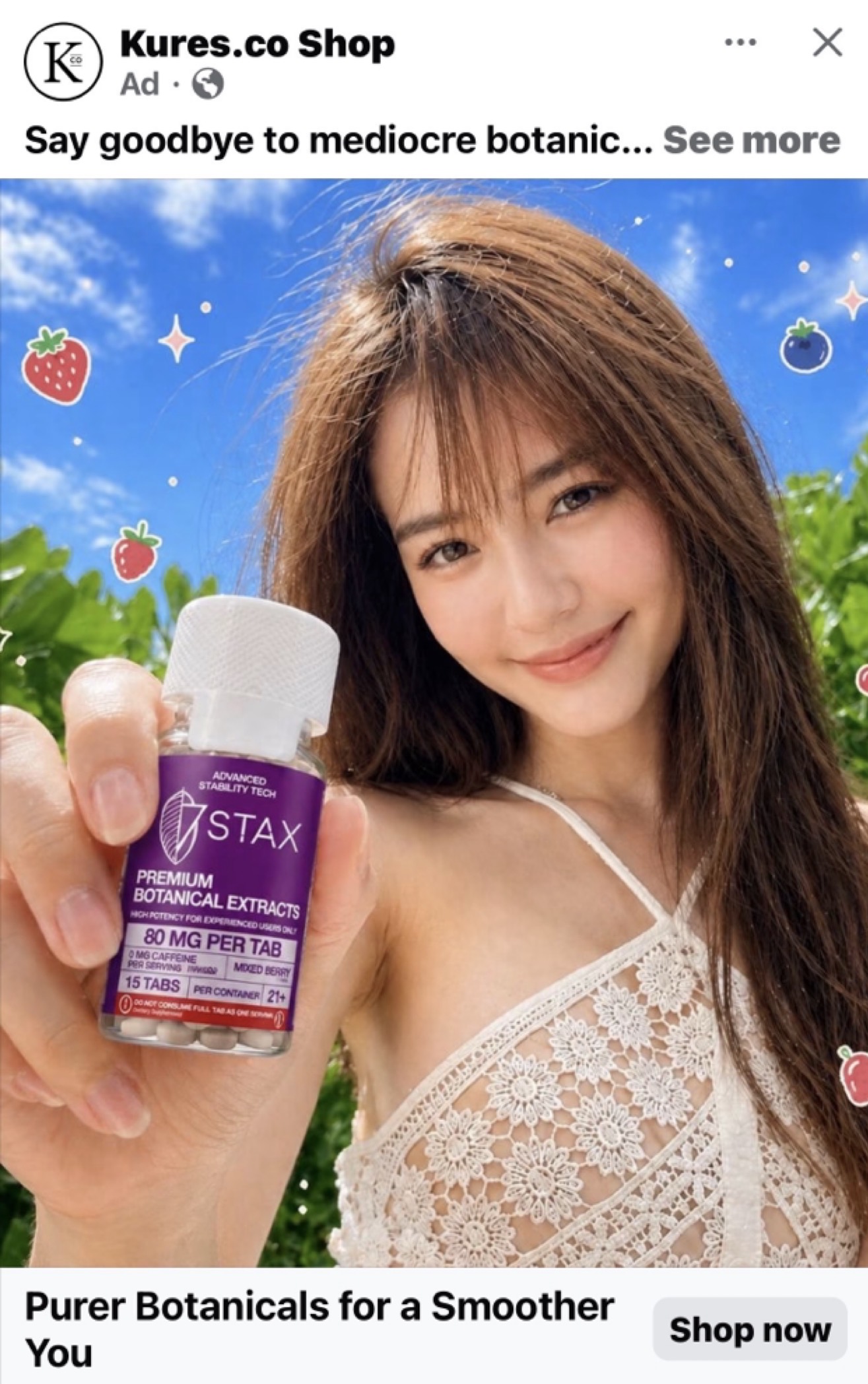
Kures STAX
Mixed berry flavor, caffeine, and “advanced” language turn a potent product into a performance-style brand.
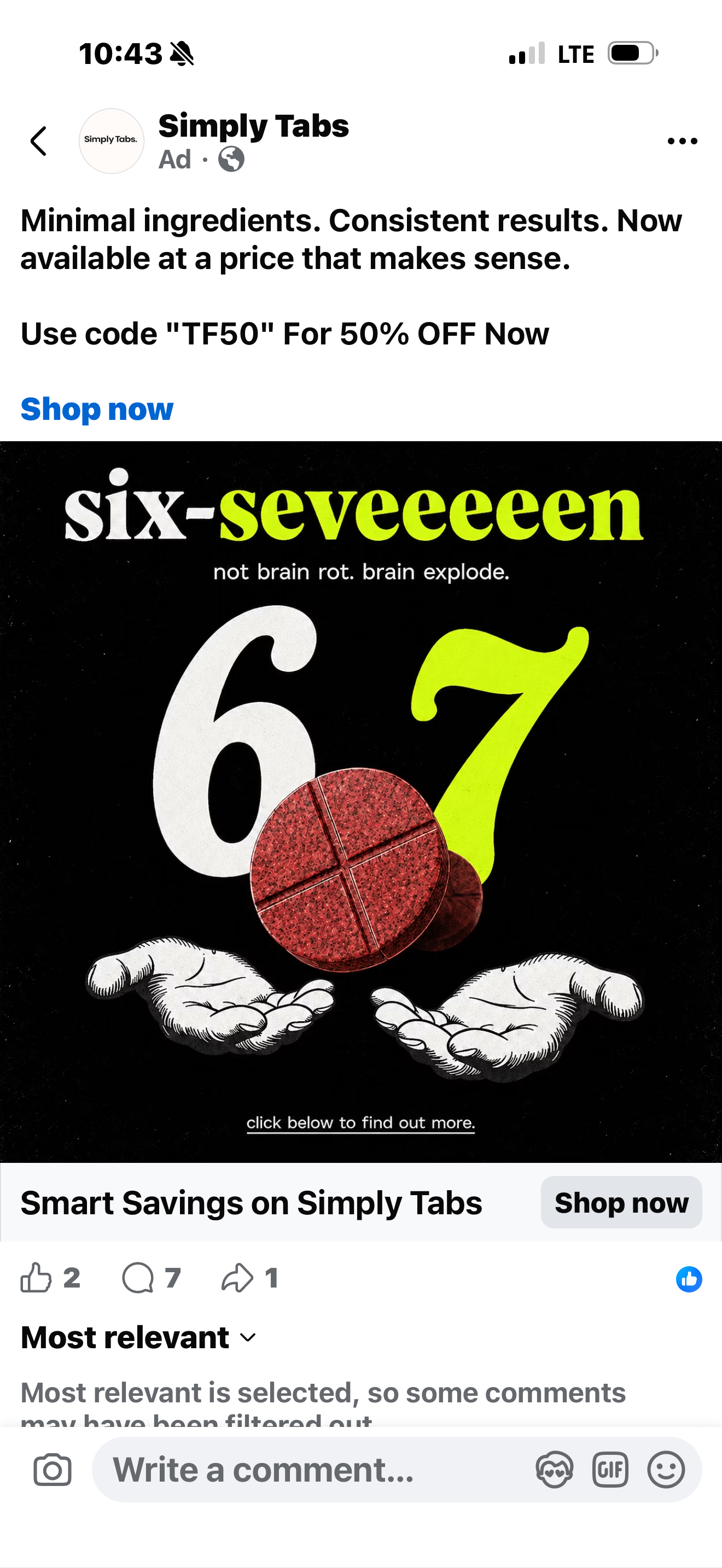
“Simply Tabs” / “6 7” Ad
Cryptic youth-style language, discounts, and meme-like branding make the product feel like internet culture instead of a public-health threat.
The concern is not a flavor alone. It is the combination of opioid activity, uncertain labeling, high-concentration formulations and consumer access.
What to look for in your neighborhood
Red flags on shelves
- Labels that say “7-OH,” “7-Hydroxy,” “Hydroxie,” “7OHMZ,” “Ultra Seven,” “Stacks,” or “Simply Tabs”
- Chewable tablets, gummies, blister packs, shots, or small colorful containers
- Flavors like blue raspberry, strawberry, mixed berry, lemon, cookies and cream, or watermelon fruit punch
- Words like “botanical,” “alkaloid,” “ultra potent,” “premium,” “control,” or “consistent results”
- Products placed near vapes, candy, energy drinks, kratom, gum, or checkout counters
- Online ads using discounts, gaming culture, slang, memes, or “back in stock” urgency
What communities can do
- Ask local stores why concentrated kratom products are being sold near ordinary snacks and drinks.
- Warn schools, recovery groups, churches, coaches, employers, and neighborhood organizations.
- Report deceptive marketing to local health departments and consumer protection agencies.
- Tell local and state officials that 7-OH should not be sold like candy.
- File a complaint with the FTC about deceptive marketing: reportfraud.ftc.gov