Mad Honey
Hidden Risks
It is sold in jars, honey sticks, gummies and brightly colored packages. Traditional mad honey can contain a plant toxin that slows the heart and drops blood pressure.
It looks like honey. The effects can be anything but sweet.
Traditional “mad honey” contains grayanotoxins from certain rhododendron flowers. These toxins can disrupt the electrical activity of nerves and the heart. Poisoning has caused severe dizziness, vomiting, dangerously low blood pressure, slowed heart rate and fainting.
Meanwhile, the term “mad honey” appears on gummies, sticks, pouches and branded blends. These are not automatically chemically equivalent products. The label alone cannot tell parents what is inside.
It looks familiar.Honey, candy-style gummies and small squeeze packs can resemble ordinary food.
The heart is at risk.Grayanotoxin poisoning can cause bradycardia, hypotension and abnormal rhythms.
Names are not test results.“Mad honey,” “25,000 mg” and “lab tested” do not independently establish ingredients or potency.
Natural does not mean safe.Honey produced from certain rhododendrons can contain a naturally occurring poison.
Mad honey, explained in plain English
Parents should be able to recognize the products and understand the actual medical danger, without confusing mad honey with opioids or assuming every branded gummy contains the same ingredient.
What is mad honey?
Traditional mad honey is honey made by bees collecting nectar from certain rhododendron plants. It can contain grayanotoxins, naturally occurring poisons that affect voltage-gated sodium channels. This is different from ordinary table honey.
Is mad honey an opioid?
No. Grayanotoxins do not act like mitragynine, 7-OH, or tianeptine at opioid receptors. Mad honey belongs in a retail-intoxicant awareness guide because it can cause serious poisoning, especially cardiovascular toxicity. It should not be described as heroin or as an opioid.
What happens when someone eats it?
Poisoning may cause nausea, vomiting, sweating, dizziness, weakness, blurred vision, confusion, very slow heart rate, low blood pressure and fainting. Severe cases may cause dangerous abnormal heart rhythms. Effects can begin within minutes to a few hours.
Why are low heart rate and blood pressure so serious?
A marked fall in blood pressure or heart rate can reduce blood flow to the brain and other organs. A person may collapse, become confused or lose consciousness. Hospital treatment may require monitoring, intravenous fluids and medications such as atropine.
Are gummies and honey sticks the same as traditional mad honey?
Not necessarily. The phrase “mad honey” is used on products with different formats and marketing claims. Gummies and blends may contain other ingredients, and photographs cannot establish their composition. A laboratory report must identify the specific compounds and their concentrations.
Does a 25,000 mg label mean 25,000 mg of grayanotoxin?
No. Large numbers on packages may refer to total honey, extract, blend or another marketing measure. Without a clearly identified analyte, unit and validated test result, the number does not establish toxin content or a safe serving size.
Is it safe because it is natural or imported from Nepal or Turkey?
No. Plant-derived toxins can cause severe poisoning. Geographic origin, “organic,” “lab tested,” and “medicinal” claims do not establish safety. Grayanotoxin concentrations may vary widely between samples.
Does mad honey have proven medical benefits?
Mad honey has a history of folk use for several conditions, but reliable clinical evidence for therapeutic benefit is limited. The risk of bradycardia and hypotension makes self-treatment especially concerning.
What if someone has taken mad honey?
If the person collapses, has chest pain, faints, has trouble breathing or is difficult to wake, call 911 immediately. For other suspected exposures in the United States, call Poison Control at 1-800-222-1222. Do not induce vomiting. Keep the package for clinicians.
What is the legal status?
There is no single rule that makes all products marketed as “mad honey” lawful or unlawful. Requirements depend on ingredients, intended use, labeling and jurisdiction. Retail availability is not proof that a product has been approved for safety or efficacy.
What mad honey products look like
These are the seven product images you supplied. They illustrate the range of packaging and marketing; they do not independently confirm ingredients, test results or current retail availability.
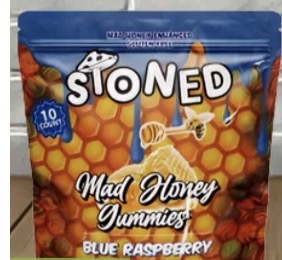
STONED Mad Honey GummiesBlue raspberry gummy packaging with honeycomb artwork. A flavor or product name does not establish which psychoactive ingredients are present.
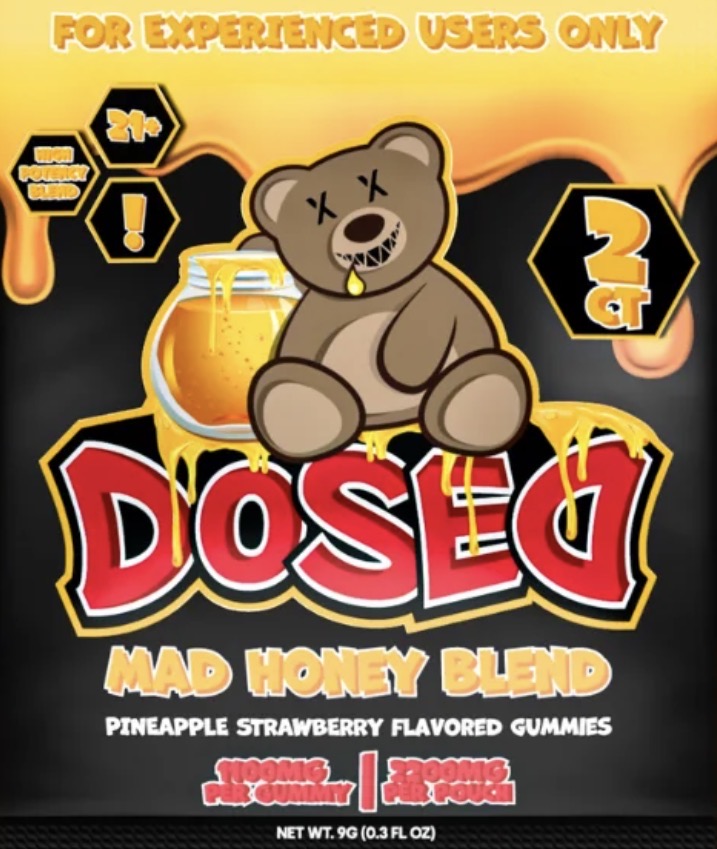
DOSED Mad Honey BlendPineapple-strawberry gummies with a cartoon bear, high-potency marketing and an age warning. The stated milligrams require ingredient-specific verification.
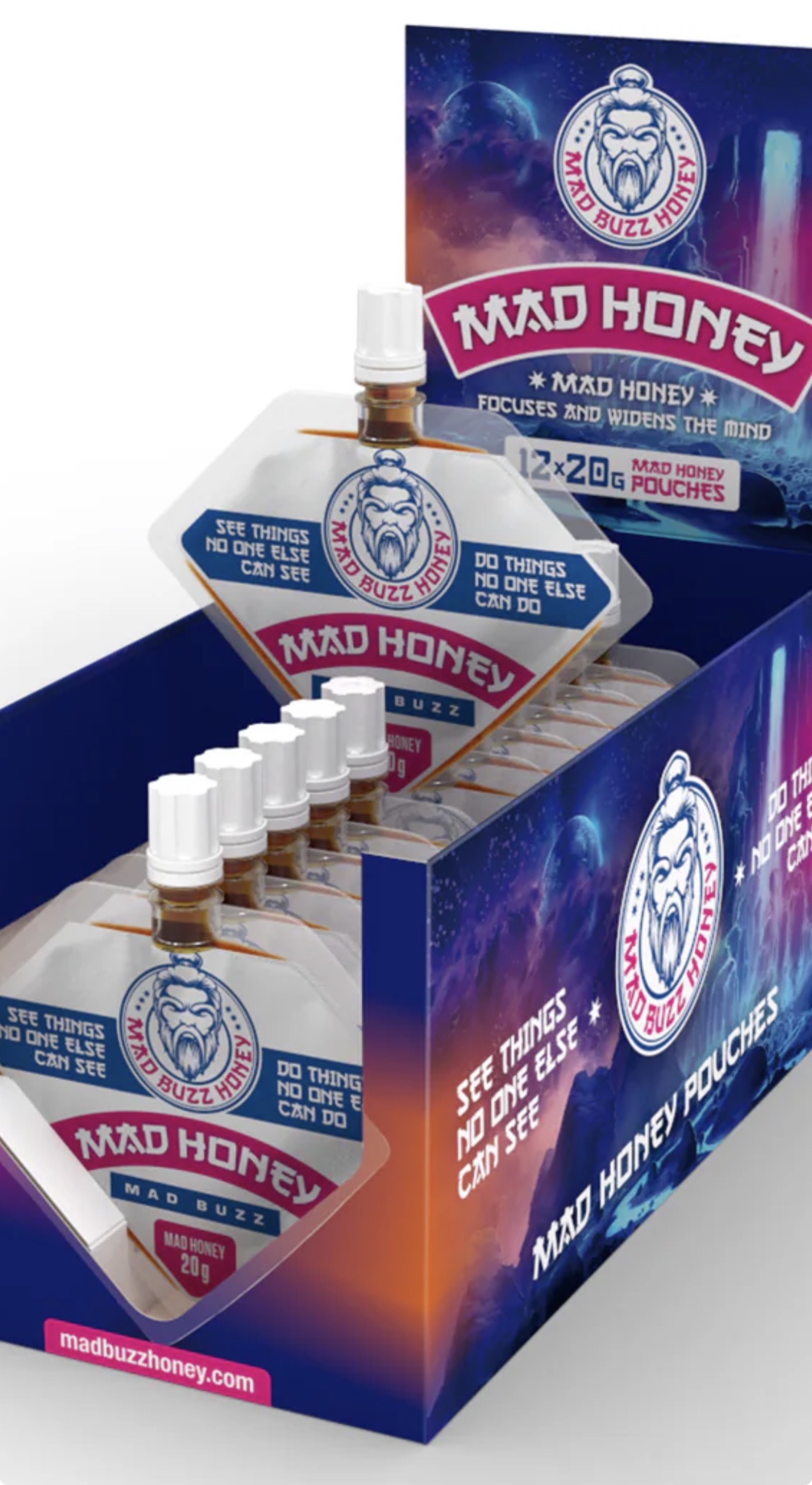
Mad Honey DisplayRetail display featuring small individually packaged products. Small serving formats can make exposure and dose difficult to assess.

Mad Türk Honey SticksIndividually wrapped Turkish mad honey sticks promoted with a buy-four-get-one offer. Traditional mad honey can contain grayanotoxins.

Honey Bear Mad HoneyBear-themed honey packaging displaying “25,000 MG.” That figure alone does not establish a grayanotoxin dose.

Nepal Mad Honey PouchSqueeze-pouch packaging marketed as Nepal mad honey. Origin claims are not a substitute for batch-specific toxin testing.
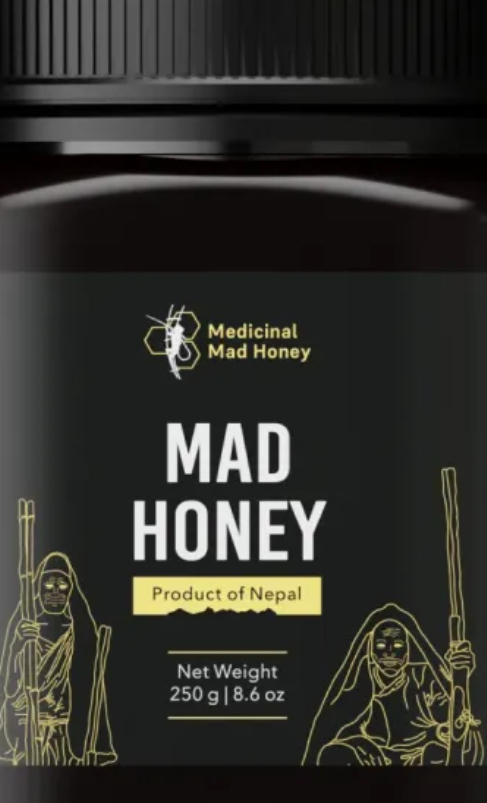
Medicinal Mad Honey JarA jar labeled “Medicinal Mad Honey” and “Product of Nepal.” Medicinal branding is not proof of clinical benefit or safety.
Important: “Mad honey” is a marketing term as well as the common name for grayanotoxin-containing honey. The photos should not be treated as laboratory confirmation that each product contains grayanotoxins.
What parents and communities should know
Warning signs of poisoning
- Dizziness, weakness, nausea or vomiting after eating a honey product
- Fainting, severe lightheadedness or confusion
- Unusually slow heartbeat or low blood pressure
- Chest pain, irregular heartbeat or difficulty staying awake
- Unclear labeling, extravagant milligram claims or no ingredient-specific test report
What to do
- Call 911 for collapse, fainting, chest pain, breathing difficulty or severe symptoms.
- Call Poison Control at 1-800-222-1222 for suspected exposures.
- Save the packaging, ingredient list and any batch or lot number.
- Report adverse events to FDA MedWatch.
- Use the site's Report a Product page to document local retail concerns.
Medical sources and further reading
Clinical and public-health references about grayanotoxin exposure, symptoms and treatment.
- CDC Yellow Book: Mad honey and grayanotoxin poisoning
- Utah Poison Control: Mad Honey Case Files (2025)
- Poison Control: Azaleas, rhododendrons and mad honey
- Peer-reviewed review: Mad honey poisoning, diagnosis and treatment
- FDA: Honey products with hidden drug ingredients (a separate product hazard)
Last reviewed: October 2026. This page provides education, not medical diagnosis or treatment.